This post contains affiliate links. If you buy through them, brewing.com earns a commission at no cost to you. How we pick products
Beer · Guide
Best Grain Mills for All-Grain Brewing
| Pick | Best for | Price |
|---|---|---|
| FERRODAY Malted Grain Mill, 2 Roller Stainless Steel | The type most brewers should buy | $92.90 ↗ as of 17 Sep 2026, 2:18am GMT+0000 Details (paid link) |
| Mrbrew Grain Crusher Homebrew Malt Mill, Manual with Wooden Base | Same idea, wooden hopper base | $92.90 ↗ as of 17 Sep 2026, 2:18am GMT+0000 Details (paid link) |
| FERRODAY Two-Roller Malt Mill | The cheapest mill that is still the right tool | $92.90 ↗ as of 17 Sep 2026, 2:18am GMT+0000 Details (paid link) |
| Vintage Shop Evill Twin Grain Mill | Worth the extra if you brew often | $179.95 ↗ as of 17 Sep 2026, 2:18am GMT+0000 Details (paid link) |
Prices come from Amazon and refresh nightly. A pick shows “Check price” when we do not have a current figure for it.
Introduction to All-Grain Brewing
All-grain brewing is a method of brewing beer that involves using whole grains, such as barley, wheat, and rye, to create the wort, which is then fermented to produce beer. This method is considered to be more authentic and traditional than extract brewing, and it allows brewers to have more control over the flavor and character of their beer.
Importance of Grain Mills in All-Grain Brewing
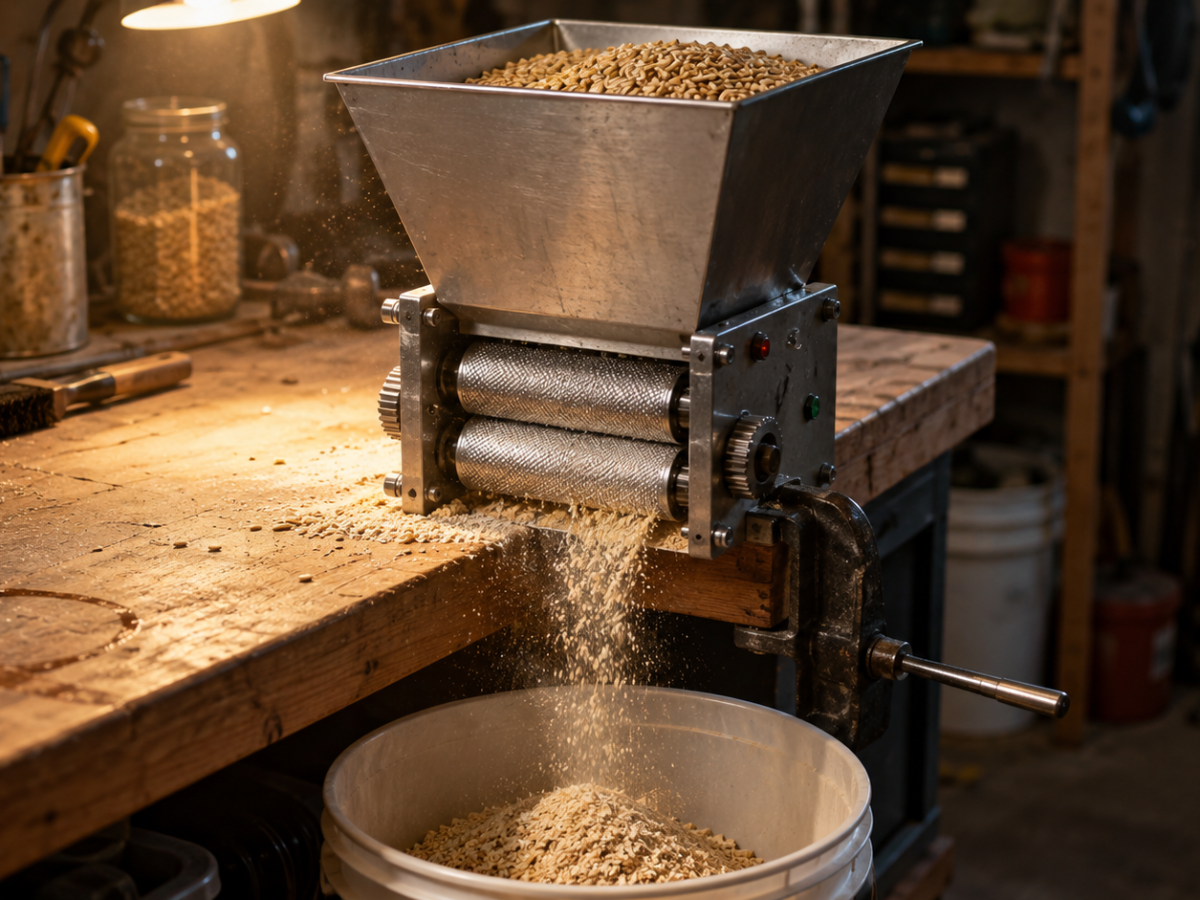
A grain mill is a critical piece of equipment in all-grain brewing, as it is used to crush the grains into a coarse flour, known as grist, which is then mixed with hot water to create the wort. The quality of the grain mill can have a significant impact on the quality of the beer, as a poor-quality mill can produce unevenly crushed grains, which can lead to inconsistent extraction and flavor.
Best Grain Mills for All-Grain Brewing
There are several types of grain mills available, including roller mills, hammer mills, and stone mills. The best grain mill for all-grain brewing will depend on the specific needs and preferences of the brewer, including the type of grains being used, the volume of beer being produced, and the desired level of automation.

The type most brewers should buy
FERRODAY Malted Grain Mill, 2 Roller Stainless Steel
Why it fits
Two rollers with an adjustable gap is the configuration that crushes malt without shredding the husk, and the husk is what forms the filter bed your sparge runs through. A stainless roller mill is the default answer for all-grain brewing for that reason alone.
Limitations
Manual crank unless you fit a drill to it, and a two-roller mill will not match a three-roller for crush consistency on very small or very large kernels.

Same idea, wooden hopper base
Mrbrew Grain Crusher Homebrew Malt Mill, Manual with Wooden Base
Why it fits
A roller mill sold with the base already made, so it sits over a bucket without you building a frame first. That is a genuine convenience on a mill that otherwise needs somewhere to clamp.
Limitations
The wooden base is the part that limits it: it fixes the height and the bucket size you can use, where a bare mill can be mounted to whatever you already have.
The cheapest mill that is still the right tool
FERRODAY Two-Roller Malt Mill
Why it fits
Two hardened rollers with an adjustable gap, which is the whole job: split the kernel, leave the husk whole so it can form the filter bed your sparge runs through. Hand crank, or chuck a drill onto the shaft.
Limitations
No hopper worth the name, so you feed it in batches, and a bare frame means you supply your own base and bucket. The gap adjustment is a pair of screws rather than a calibrated dial, so set it once with a feeler gauge and leave it.

Worth the extra if you brew often
Vintage Shop Evill Twin Grain Mill
Why it fits
A 10 lb hopper, which is more than a 5-gallon all-grain bill, so the whole crush goes in once and you turn the handle instead of refilling. Named manufacturer, so replacement rollers and knobs exist in three years.
Limitations
Roughly twice the price of a bare two-roller mill for the same crushing action. If you brew a few times a year the cheaper mill does the same job more slowly.
Equipment List
- Grain mill
- Malt
- Water
- Hops
- Yeast
- Brew kettle
- Fermenter
- Hydrometer
Step-by-Step Guide to Using a Grain Mill
Using a grain mill is a relatively straightforward process, but it does require some practice and patience to get the best results. Here is a step-by-step guide to using a grain mill:
- Prepare the grains: Before milling, the grains should be cleaned and sorted to remove any debris or impurities.
- Adjust the mill: The mill should be adjusted to the correct setting for the type of grain being used. This will depend on the specific mill and the desired level of crush.
- Mill the grains: The grains should be fed into the mill in a steady, consistent stream. The mill should be operated at a slow, steady pace to avoid overheating or damaging the grains.
- Monitor the grist: The grist should be monitored to ensure that it is being produced at the correct consistency and quality. The grist should be coarse and fluffy, with no signs of flour or dust.
Pro Tips for Using a Grain Mill
- Use the correct type of mill for the job: Different types of mills are better suited to different types of grains and brewing styles.
- Keep the mill clean: The mill should be regularly cleaned and maintained to prevent the buildup of dust and debris.
- Monitor the temperature: The mill should be operated at a temperature that is consistent with the type of grain being used. High temperatures can damage the grains or produce off-flavors.
Frequently Asked Questions
What is the best type of grain mill for all-grain brewing?
The best type of grain mill for all-grain brewing will depend on the specific needs and preferences of the brewer. Roller mills are generally considered to be the best option for most brewers, as they produce a high-quality grist and are relatively easy to use and maintain.
How do I adjust the mill to the correct setting?
The mill should be adjusted to the correct setting for the type of grain being used. This will depend on the specific mill and the desired level of crush. It is generally recommended to start with a coarse setting and gradually adjust the mill to a finer setting as needed.
Shop this guide