This post contains affiliate links. If you buy through them, brewing.com earns a commission at no cost to you. How we pick products
Beer · Equipment
Conical Fermenters: What Actually Matters Before You Spend $400
Pressure versus atmospheric, cooling coils and glycol, weld finish and valve design, and the headspace maths that decides your capacity. Four stainless conicals, with what each one gives up.
Affiliate disclosure: brewing.com earns a commission from qualifying Amazon purchases. Picks are editorial and not based on hands-on lab testing. How we pick products
| Pick | Best for | Price |
|---|---|---|
| Northern Brewer Reactor Conical Fermenter | Best first stainless conical | $311.99 ↗ as of 17 Sep 2026, 2:18am GMT+0000 Details (paid link) |
| VEVOR 16 Gal Pressure Fermenter, 15 PSI | Best for pressure fermentation | $314.50 ↗ as of 17 Sep 2026, 2:18am GMT+0000 Details (paid link) |
| 13 Gallon Stainless Conical Fermenter | Most capacity per dollar | $469.00 ↗ as of 17 Sep 2026, 2:18am GMT+0000 Details (paid link) |
| 17 Gallon Stainless Conical Fermenter with Cooling Coil | Largest, with a cooling coil | $469.00 ↗ as of 17 Sep 2026, 2:18am GMT+0000 Details (paid link) |
Prices come from Amazon and refresh nightly. A pick shows “Check price” when we do not have a current figure for it.
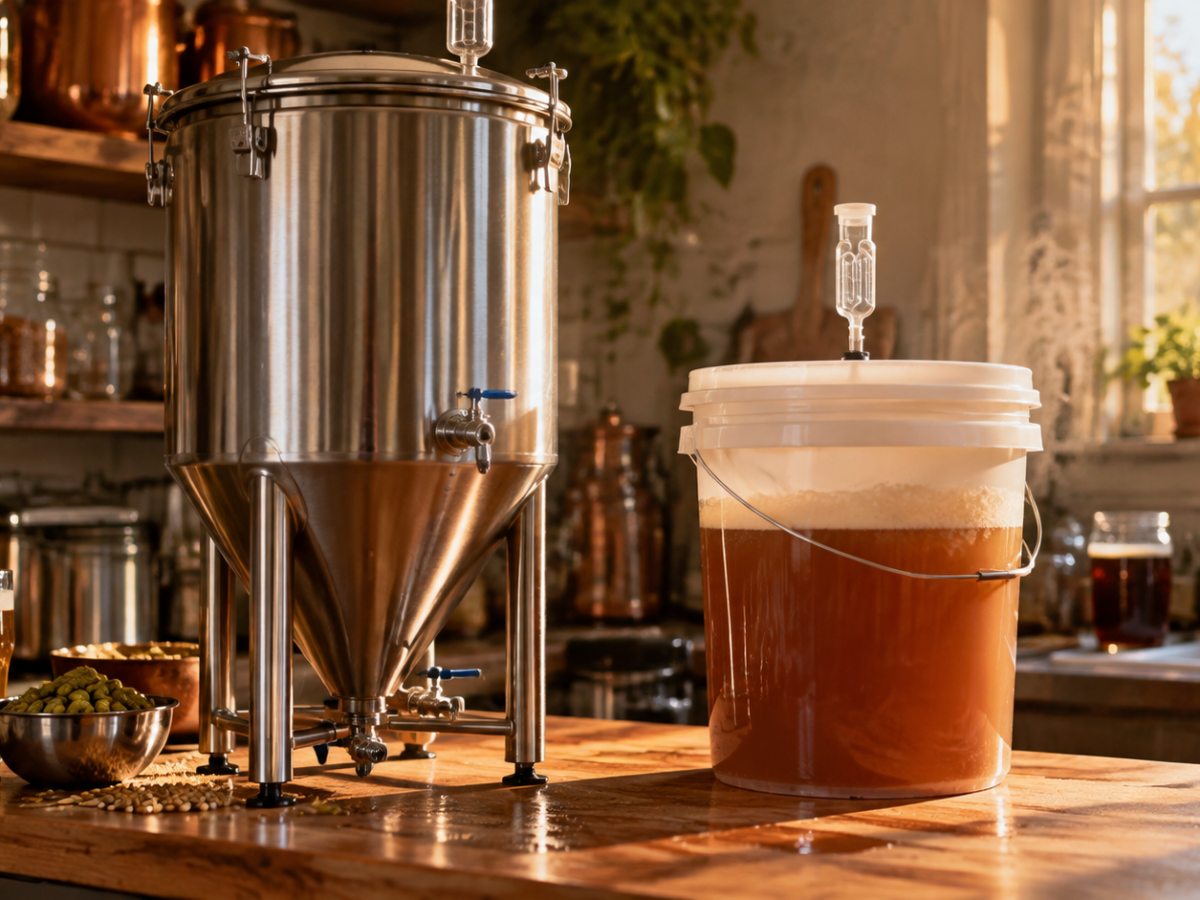
A conical fermenter is the first piece of equipment that changes what happens to your beer after the boil, and it is the one homebrewers most often buy for the wrong reason. This guide is for someone already brewing all-grain batches in buckets or carboys, who is tired of racking, tired of leaving a third of the yeast behind, and wondering whether stainless is worth four hundred dollars. If you brew twice a year, it is not. If you brew monthly and you keg, it changes the job.
What a conical actually buys you
The shape is the point. A cone-bottomed vessel collects trub and settled yeast in a narrow column at the very bottom, where a valve can remove it without disturbing the beer above. A bucket or carboy spreads the same material across a wide flat floor, so the only way to separate beer from sediment is to move the beer — siphoning, splashing, oxidising.
Three consequences follow, and only the first is the one people buy for:
- You stop racking to secondary. Dump the cone twice during fermentation and the beer sitting above it is already clear. The secondary vessel, and the oxygen pickup that comes with every transfer, disappears from your process.
- Yeast harvesting becomes routine. The first material out of the dump valve is trub and dead cells; what follows is clean, healthy slurry. Pitching harvested yeast at proper rates is the single cheapest quality improvement in homebrewing, and a cone makes it a two-minute job instead of a project.
- Light stops being a variable. Stainless is opaque. Every glass or clear-plastic fermenter is a lightstruck-beer risk that you manage with a blanket and hope.
Pressure or not: the decision that splits the category
This is the real fork in the road, and it is worth understanding before you look at a single listing.
A non-pressure conical ferments at atmospheric pressure through an airlock or blowoff, exactly like a bucket. It is simpler, cheaper, and has fewer parts that can fail. A pressure-rated conical is built to hold CO2 produced by the yeast — typically with a spunding valve that vents above a set pressure, so the vessel holds a few PSI of the beer’s own gas.
Pressure fermentation is not a gimmick, and the mechanism is well established in brewing literature. Dissolved CO2 and elevated head pressure suppress the yeast’s production of esters and higher alcohols. The practical payoff is that you can ferment warmer without the beer tasting like it was fermented warm — useful for lagers, and useful for anyone whose fermentation space runs hot in summer. Two more benefits follow: you can transfer to a keg under pressure with no oxygen contact at all, and you can carbonate in the fermenter rather than after packaging.
The catch is that pressure changes the safety picture. A pressure-rated vessel has a stated working pressure and a pressure-relief path, and both matter. Never pressurise a vessel that is not rated for it. A non-pressure conical sealed with a blank cap is a bomb with your beer inside it, and stainless failing under pressure is not the gentle event that a cracked carboy is. If a listing does not state a working pressure in PSI, treat the vessel as atmospheric-only.
Cooling: the part people budget for last and need most
Temperature control matters more to your beer than the fermenter does. A conical gives you two routes to it.
The cheap route is a chest freezer or old fridge with an external temperature controller, with the fermenter inside. This works, it works well, and it is what most homebrewers should do. The limit is physical: a 16-gallon conical with legs is tall, and the number of freezers it fits in is small. Measure before you buy, including the leg height and the clearance the dump valve needs underneath it.
The other route is a cooling coil — an internal stainless tube, or an external jacket, through which you circulate chilled fluid. This is how commercial breweries do it, and a few of the fermenters in this price band include the coil. The coil itself is nearly useless on its own; it needs a source of cold propylene glycol, which means a glycol chiller, which is a separate purchase that frequently costs more than the fermenter. Buying a fermenter with a coil is a reasonable way to leave that door open. It is not a temperature-control solution on the day it arrives.
Welds, polish, and the sanitation problem nobody photographs
Stainless is only easy to clean where it is smooth. The places that harbour infection in a conical are the ones you cannot see: the inside of a poorly finished weld, the crevice behind a weldless fitting’s O-ring, the thread of a valve, and the underside of a racking arm.
What to look for, in order of how much it matters:
- Interior weld finish. Good welds are ground smooth and passivated. Rough, pitted, or discoloured interior welds are crevices, and no amount of PBW reaches into a crevice.
- Tri-clamp fittings over weldless. A tri-clamp joint comes apart completely in seconds, exposing every surface. Weldless bulkheads are cheaper and always have an O-ring seated against a surface you cannot scrub without disassembly.
- Butterfly over ball valves. A ball valve traps beer inside the ball. It must be disassembled after every batch, and most people do not. A butterfly valve has one gasket and nowhere to hide.
- 304 stainless, stated. 304 is the homebrewing standard; listings that say only “stainless steel” are telling you nothing.
Plastic conicals, and when they are the right answer
A significant share of the conical market is moulded plastic rather than stainless, at a third of the price, and dismissing them is a mistake worth avoiding. Food-grade HDPE and PET conicals give you the same cone geometry, the same dump valve, and the same end to racking. What you give up is scratch resistance — plastic scratches, and a scratch is a permanent infection site — plus light protection, and the ability to run any cleaner hot enough to be quick about it.
The honest framing is that a plastic conical is a consumable you replace every few years, and a stainless one is equipment you keep. If you are not yet sure conical fermentation suits your process, the plastic route is a cheap way to find out before committing four hundred dollars. If you already know, stainless is cheaper over any reasonable horizon and it is the only route to pressure.
Racking arms, sample valves, and the oxygen problem
Most stainless conicals include a rotating racking arm partway up the cone, and its purpose is more specific than it looks. It lets you draw beer from above the sediment line without opening the vessel, which means you can take a gravity sample mid-fermentation without exposing the beer to air, and you can package from a point the trub never reaches.
That matters because oxygen is the thing that quietly ages your beer. Hot-side oxygen exposure is largely a commercial concern; cold-side exposure — anything after fermentation is finished — is what turns a bright hoppy beer into wet cardboard inside six weeks. Every open transfer is a dose. A conical with a racking arm removes one transfer; a pressure-rated conical with a closed transfer to a purged keg removes the last one. This is the strongest technical argument for the whole category, and it is almost never the one listings lead with.
Capacity maths
Conical capacity is rated to the brim, and you cannot use the brim. Vigorous ale fermentation throws krausen high enough to need roughly 25–30% headspace, and the cone at the bottom holds volume that is not usable beer either. For a 5-gallon batch you want 7.5 gallons or more of vessel. For 10-gallon batches you are looking at 13 gallons and up. Undersize it and you will be cleaning krausen out of an airlock at midnight.
The fermenters

Best first stainless conical
Northern Brewer Reactor Conical Fermenter
Why it fits
8.5 gallons of 304 stainless, which is the right size for 5-gallon batches with real krausen headroom. It has the two features that justify a conical at all — a bottom dump valve and an adjustable racking arm — plus embossed volume markings and a gasketed, clamped lid. The reason to pay for this one over a generic import is that Northern Brewer is a US homebrew retailer that stocks its own replacement gaskets and parts, and a fermenter is a thing you will need a gasket for.
Limitations
Atmospheric only — there is no published pressure rating, so do not spund it or transfer under pressure. No cooling coil, so temperature control means a fridge or freezer big enough to hold it. 8.5 gallons rules out 10-gallon batches.
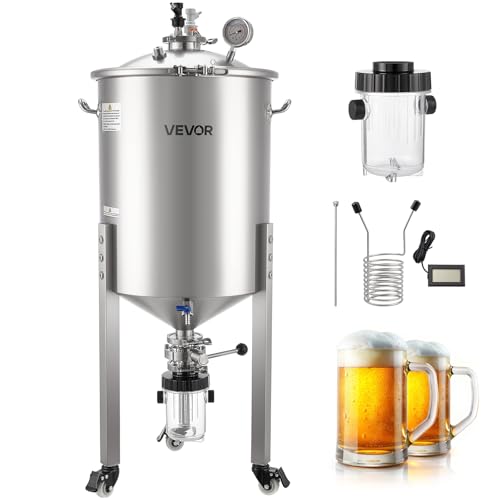
Best for pressure fermentation
VEVOR 16 Gal Pressure Fermenter, 15 PSI
Why it fits
The only vessel here with a published working pressure, and 15 PSI is enough for real spunding, closed pressure transfers to a keg, and warm-fermented lagers. It is 304 stainless with a 3.5-inch tri-clamp lid, a built-in thermometer, a cooling tube for a future glycol setup, and a yeast collection bottle on the cone. At 16 gallons it is the only one here with headroom for 10-gallon batches.
Limitations
The published wall thickness is 0.5 mm, which is thin — this is a budget vessel, not a Blichmann. VEVOR parts support is mail-order and inconsistent; buy spare gaskets with it. At 16 gallons plus legs it will not fit in most chest freezers, so plan on the glycol route.

Most capacity per dollar
13 Gallon Stainless Conical Fermenter
Why it fits
13 gallons is the practical sweet spot for someone brewing 10-gallon batches, and this is the cheapest honest path to that size. If you are already doubling your batches to halve your brew days, the capacity is the whole argument.
Limitations
An unbranded listing with no named manufacturer, which means no parts channel — when a gasket or valve fails you are sourcing a generic replacement by measurement. No stated pressure rating, so treat it as atmospheric. Inspect the interior welds when it arrives and return it if they are rough.

Largest, with a cooling coil
17 Gallon Stainless Conical Fermenter with Cooling Coil
Why it fits
17 gallons with an integrated cooling system, for the brewer who has decided that glycol is the endgame and would rather buy the coil once. This is the configuration commercial breweries use, at homebrew scale and homebrew money.
Limitations
The coil does nothing without a glycol chiller, which is a substantial separate purchase. Unbranded listing, so the same parts-support warning applies. At 17 gallons it is a two-person lift full, and it needs floor space plus dump clearance underneath.
How to choose between them
- You brew 5-gallon batches and own a spare fridge or freezer: the Northern Brewer Reactor. Right size, real parts support, nothing to go wrong.
- You want to ferment lagers warm, or transfer to kegs without oxygen: the VEVOR. It is the only pressure-rated vessel here, and that capability is not retrofittable.
- You have moved to 10-gallon batches: the 13-gallon, or the 17-gallon if you are committing to glycol.
- You are chasing clarity alone: reconsider. Cold crashing in any vessel plus a fining agent gets you most of the way for the price of a bag of gelatin.
- You ferment in a closet at room temperature and always will: a conical will not fix that. Spend the money on temperature control first — it is the larger lever by a wide margin.
Costs nobody mentions in the listing
- Spare gaskets, immediately. Lid gaskets and tri-clamp seals are consumables, they fail on brew day, and the generic ones are sized by measurement. Order them with the fermenter.
- A stand, or clearance. The dump valve needs a jar under it. A conical on legs on a countertop usually does not have room, and a conical on the floor means kneeling.
- CO2, if you go pressure. A spunding valve, a tank, a regulator and gas lines. The vessel is the cheap part of a pressure-transfer setup.
- A glycol chiller, if you bought the coil. Frequently more than the fermenter itself. A coil with no chiller is decoration.
- Caustic-grade cleaning, and time. Stainless wants an alkaline cleaner such as PBW and periodic passivation with an acid sanitiser to maintain its corrosion layer. Bleach will pit it permanently. Budget more cleaning time than a bucket, not less — there are more surfaces.
- Floor space you will not get back. These do not nest, stack, or go in a cupboard.
How these picks were made
We have not fermented in these vessels side by side, and we do no hands-on testing. The selections above are based on published manufacturer specifications, capacity and headspace maths, stated pressure ratings, fitting and valve design, and whether the seller has a parts channel you can actually buy a gasket from in two years. Where a listing is unbranded and thin on published detail, we have said so rather than filled the gap. Prices come from Amazon and refresh nightly; fermenter stock moves unpredictably, so confirm capacity, material and pressure rating on the product page before you buy.
Shop this guide
VEVOR Pressure Fermenter 15 PSI, 16 Gal/60L All-in-One Stainless Steel Conical Secondary…
Conical Fermenter for Homebrew/Wine/Brewing, Pro Grade Stainless Steel - 13 Gallons
Fermentation tank with chiller for home brewing Stainless steel conical fermenter with…