This post contains affiliate links. If you buy through them, brewing.com earns a commission at no cost to you. How we pick products
Beer · Guide
Best Home Beer Carbonation Systems
| Pick | Best for | Price |
|---|---|---|
| 5 Gallon Home Brew Keg - New Ball Lock - Stainless Steel | The vessel everything else attaches to | $144.99 ↗ as of 17 Sep 2026, 2:18am GMT+0000 Details (paid link) |
| 5 lb. Aluminum CO2 Cylinder with CGA 320 Valve | Gas supply | $84.80 ↗ as of 17 Sep 2026, 2:18am GMT+0000 Details (paid link) |
| YaeBrew Dual Gauge CO2 Regulator for Draft Beer Homebrew Kegerator CGA320 | Set the pressure, see both numbers | $33.99 ↗ as of 17 Sep 2026, 2:18am GMT+0000 Details (paid link) |
| UP100 Homebrew Cornelius Style Keg Carbonation Lid Kit with 0.5 Micron Stone | Fastest route to carbonated beer | $31.90 ↗ as of 17 Sep 2026, 2:18am GMT+0000 Details (paid link) |
| Carbonating Stone with 1/4" Barb, 0.5 Micron | Stone on its own | $9.42 ↗ as of 17 Sep 2026, 2:18am GMT+0000 Details (paid link) |
| Kegco 5'/3/16" ID Beer Line with Hexnut Assembly | Line length is not arbitrary | $20.92 ↗ as of 17 Sep 2026, 2:18am GMT+0000 Details (paid link) |
| PERA Ball Lock MFL Disconnect Set with Swivel Nuts | Gas in, beer out | $8.45 ↗ as of 17 Sep 2026, 2:18am GMT+0000 Details (paid link) |
| Inkbird Dual Stage Temperature Controller | Temperature is half the equation | $34.99 ↗ as of 17 Sep 2026, 2:18am GMT+0000 Details (paid link) |
Prices come from Amazon and refresh nightly. A pick shows “Check price” when we do not have a current figure for it.
Introduction to Home Beer Carbonation Systems
For more beer tips, check out our beer brewing guides.Home beer carbonation systems have become increasingly popular among beer enthusiasts, allowing them to carbonate their favorite brews with ease and precision. In this article, we will explore the best home beer carbonation systems, including the necessary equipment, step-by-step instructions, pro tips, and frequently asked questions.
Necessary Equipment for Home Beer Carbonation
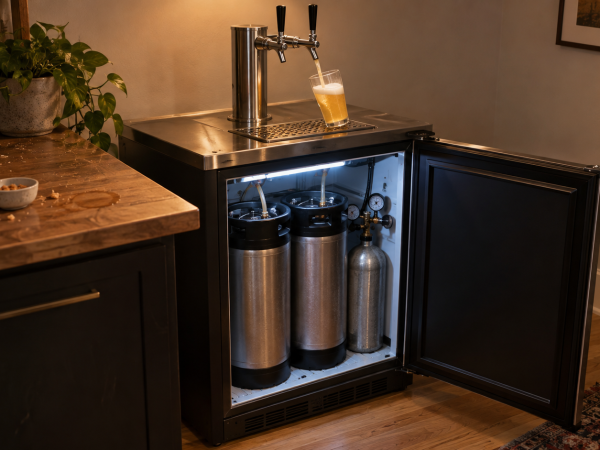
To get started with home beer carbonation, you will need the following equipment:
- Carbonation tank or keg
- CO2 regulator
- CO2 tank
- Carbonation stones or diffusion stones
- Beer lines and fittings
- Pressure gauge
- Temperature control device (optional)

The vessel everything else attaches to
5 Gallon Home Brew Keg – New Ball Lock – Stainless Steel
Why it fits
A 5 gallon ball-lock Cornelius keg is the standard vessel for force carbonation at home: it holds exactly one homebrew batch, it seals at serving pressure, and every gas fitting and disconnect sold for homebrewing is made to fit it. Buying new means new gaskets and a lid that seals on the first try.
Limitations
Ball lock and pin lock are not interchangeable. Ball lock is the common homebrew standard, so buy the disconnects to match rather than assuming.
Gas supply
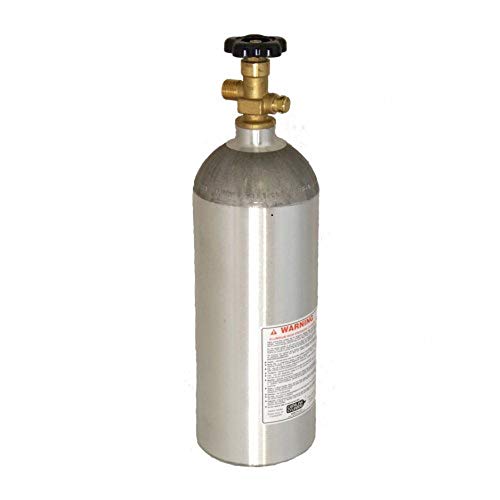
5 lb. Aluminum CO2 Cylinder with CGA 320 Valve
Why it fits
Five pounds is the size that fits beside a keg in a refrigerator and still carbonates and dispenses several batches between fills. The CGA-320 valve is the standard beverage-CO2 thread, so any homebrew regulator will thread straight on.
Limitations
It ships empty. You have to find a gas supplier or a welding shop that fills or exchanges CO2, and an exchange cylinder may come back scuffed.

Set the pressure, see both numbers
YaeBrew Dual Gauge CO2 Regulator for Draft Beer Homebrew Kegerator CGA320
Why it fits
Dual gauge means one needle shows what is left in the tank and the other shows what you are actually applying to the beer. Carbonation is a pressure-and-temperature calculation, so a regulator you can read precisely is what makes the volumes-of-CO2 chart usable rather than decorative.
Limitations
A single regulator sets one pressure for everything downstream. If you want one keg carbonating at 30 PSI and another serving at 12, you need a second regulator or a secondary manifold.
Step-by-Step Guide to Carbonating Beer at Home
Carbonating beer at home is a relatively simple process. Here is a step-by-step guide to get you started:
- Chill your beer to the desired temperature (usually between 38°F and 45°F)
- Purge the carbonation tank or keg of any air or oxygen
- Connect the CO2 regulator to the CO2 tank and set the pressure to the recommended level (usually between 10 and 15 PSI)
- Attach the carbonation stone or diffusion stone to the beer line and insert it into the beer
- Slowly release the CO2 into the beer, monitoring the pressure gauge and adjusting as needed
- Allow the beer to carbonate for several hours or overnight, depending on the desired level of carbonation

Fastest route to carbonated beer
UP100 Homebrew Cornelius Style Keg Carbonation Lid Kit with 0.5 Micron Stone
A replacement corny lid with the diffusion stone already plumbed through it, so gas enters the beer as fine bubbles from below instead of sitting on top waiting to dissolve. It turns overnight carbonation into a job measured in hours.

Stone on its own
Carbonating Stone with 1/4" Barb, 0.5 Micron
If you already have a spare lid or a fitting to put it on, the stone is the part that matters. Half a micron is the standard pore size for carbonating and for oxygenating wort.
Pro Tips for Home Beer Carbonation
Here are some pro tips to help you achieve the perfect level of carbonation:
- Use a temperature control device to maintain a consistent temperature, as this will affect the carbonation level
- Monitor the pressure gauge closely, as over-carbonation can lead to foamy or flat beer
- Experiment with different CO2 pressures and carbonation times to find your perfect balance
- Consider investing in a carbonation tank or keg with a built-in temperature control device and pressure gauge

Line length is not arbitrary
Kegco 5'/3/16" ID Beer Line with Hexnut Assembly
Beer line resistance has to balance serving pressure or you pour foam. Five feet of 3/16 inch is the usual starting point for typical homebrew serving pressures, and it comes with the hexnut already fitted.
Gas in, beer out
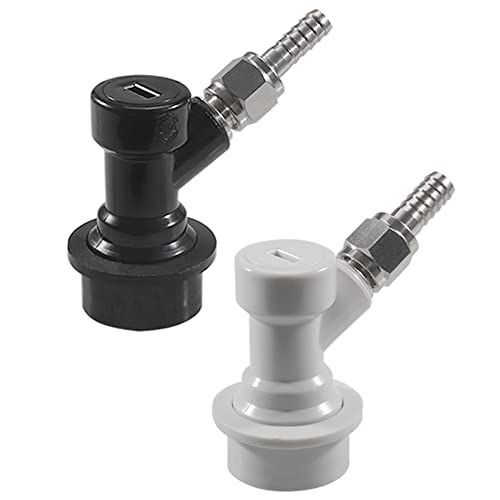
PERA Ball Lock MFL Disconnect Set with Swivel Nuts
Grey for gas, black for liquid, and they are keyed differently so you cannot cross them. A spare pair costs almost nothing and saves a brew day when an O-ring finally goes.

Temperature is half the equation
Inkbird Dual Stage Temperature Controller
The pressure you need depends entirely on how cold the beer is, so a carbonation chart is only as good as your temperature control. This plugs a fridge into one socket and a heater into the other and holds a setpoint.
Looking for more brewing resources? Browse our find local breweries or visit our brewing equipment for more tools and tips.
Frequently Asked Questions About Home Beer Carbonation
Here are some frequently asked questions about home beer carbonation:
- Q: What is the ideal CO2 pressure for carbonating beer?
- A: The ideal CO2 pressure for carbonating beer depends on the type of beer and personal preference, but a general range is between 10 and 15 PSI
- Q: How long does it take to carbonate beer at home?
- A: The carbonation time will depend on the temperature, CO2 pressure, and type of beer, but it can take anywhere from a few hours to overnight
- Q: Can I carbonate beer at room temperature?
- A: It is not recommended to carbonate beer at room temperature, as this can lead to off-flavors and inconsistent carbonation levels
Shop this guide