This post contains affiliate links. If you buy through them, brewing.com earns a commission at no cost to you. How we pick products
Beer · Guide
Best Wort Chillers Immersion vs Plate
| Pick | Best for | Price |
|---|---|---|
| Northern Brewer Copperhead Copper Immersion Wort Chiller | Copper, fastest heat transfer | $164.99 ↗ as of 17 Sep 2026, 2:18am GMT+0000 Details (paid link) |
| Stainless Steel Immersion Wort Chiller | Budget stainless immersion | $69.49 ↗ as of 17 Sep 2026, 2:18am GMT+0000 Details (paid link) |
| HFS 40-Plate Stainless Steel 304 Homebrew Wort Chiller Heat Exchanger | More plates, more surface area | $72.99 ↗ as of 17 Sep 2026, 2:18am GMT+0000 Details (paid link) |
| Ferroday 20 Plate Wort Chiller, Stainless Steel Brazed Plate Heat Exchanger | Smaller and cheaper | $43.90 ↗ as of 17 Sep 2026, 2:18am GMT+0000 Details (paid link) |
| Five Star P.B.W. Cleanser | Clean it with this, not bleach | $30.99 ↗ as of 17 Sep 2026, 2:18am GMT+0000 Details (paid link) |
Prices come from Amazon and refresh nightly. A pick shows “Check price” when we do not have a current figure for it.
Introduction to Wort Chillers
For more equipment tips, check out our all equipment reviews.Wort chillers are an essential piece of equipment for homebrewers and professional brewers alike. They are used to rapidly cool wort after boiling, which helps to prevent the growth of bacteria and other microorganisms. In this article, we will discuss the best wort chillers available in 2025, including immersion and plate chillers.
Equipment List
- Immersion wort chiller
- Plate wort chiller
- Hose
- Water source
- Thermometer
Immersion Wort Chillers
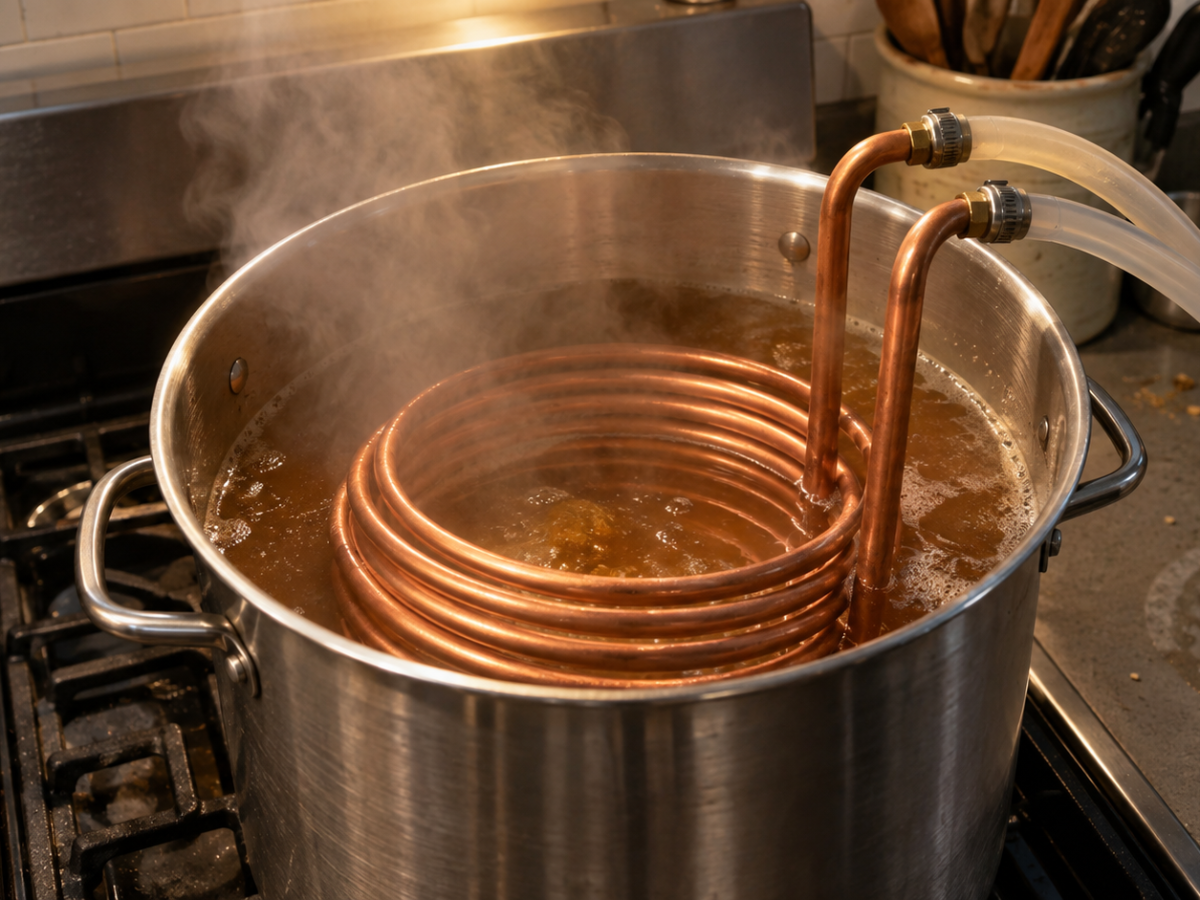
Immersion wort chillers are the most common type of chiller used by homebrewers. They consist of a coil of tubing that is submerged in the wort, and they work by circulating cold water through the coil to cool the wort.

Copper, fastest heat transfer
Northern Brewer Copperhead Copper Immersion Wort Chiller
Why it fits
Copper moves heat faster than stainless, which is the entire argument for paying more for it. Copper also passivates in contact with wort rather than corroding, and a copper coil is easy to inspect because tarnish is visible.
Limitations
Copper is soft. It kinks if you unroll it carelessly, and it will discolour permanently, which alarms people who assume discolouration means contamination.

Budget stainless immersion
Stainless Steel Immersion Wort Chiller
The same idea without the brand markup. For 5 gallon batches with cold tap water, an immersion coil is an immersion coil.
Step-by-Step Instructions for Using an Immersion Wort Chiller
- Submerge the chiller in the wort
- Connect the hose to the chiller and a water source
- Turn on the water source and monitor the temperature
- Once the desired temperature is reached, turn off the water source
Plate Wort Chillers
Plate wort chillers are a more efficient type of chiller that uses a series of plates to cool the wort. They are more expensive than immersion chillers, but they can cool wort more quickly and efficiently.
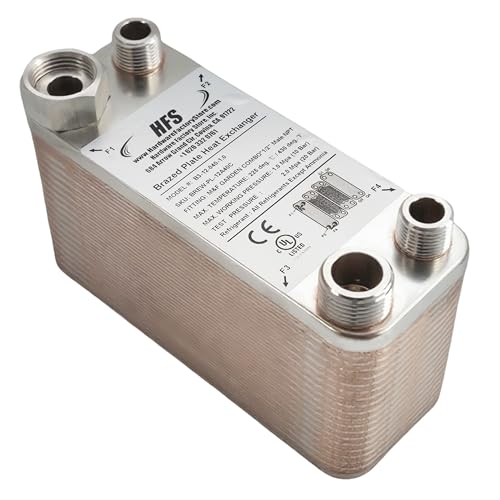
More plates, more surface area
HFS 40-Plate Stainless Steel 304 Homebrew Wort Chiller Heat Exchanger
Why it fits
Forty brazed stainless plates give a large heat-exchange area in a unit that fits in one hand, and it chills wort as it flows rather than in a batch. That is why a plate chiller reaches pitching temperature in minutes where an immersion coil takes half an hour.
Limitations
You cannot see inside it. Hop and trub debris lodges between plates and must be back-flushed and recirculated with caustic after every use, and a plate chiller that is not cleaned properly is the worst infection risk on a brew day.

Smaller and cheaper
Ferroday 20 Plate Wort Chiller, Stainless Steel Brazed Plate Heat Exchanger
Why it fits
Twenty plates instead of forty, at roughly half the price. For 5 gallon batches with a pump and reasonably cold water this is enough exchange area, and the smaller body is quicker to flush.
Limitations
Half the surface area means you either run the wort through more slowly or accept a higher outlet temperature. Undersizing a plate chiller is the usual reason people conclude they do not work.
Pro Tips for Using a Plate Wort Chiller
- Use a pump to circulate the wort through the chiller
- Monitor the temperature closely to avoid over-cooling
- Clean the chiller regularly to prevent the growth of bacteria

Clean it with this, not bleach
Five Star P.B.W. Cleanser
PBW is the alkaline cleaner brewers use on soiled stainless and on the inside of plate chillers. Unlike bleach it will not pit stainless or leave chlorine behind to turn into chlorophenols in the next batch.
Frequently Asked Questions
- Q: What is the best type of wort chiller for a homebrewer?
- A: The best type of wort chiller for a homebrewer depends on their specific needs and budget. Immersion chillers are a good option for small batches, while plate chillers are better suited for larger batches.
- Q: How do I clean my wort chiller?
- A: Cleaning your wort chiller regularly is important to prevent the growth of bacteria. Use a brewery cleaner such as PBW with hot water, then a no-rinse sanitiser like Star San before each brew. Avoid bleach: any residue converts to chlorophenols, the source of the medicinal off-flavour, and it pits stainless and corrodes copper. Rinse thoroughly with cold water.
Shop this guide

HFS(R) 40-Plate Stainless Steel 304 Homebrew Beer Wort Chiller Heat Exchanger, 7.5"…