This post contains affiliate links. If you buy through them, brewing.com earns a commission at no cost to you. How we pick products
Coffee · Guide
Coffee Scale Buying Guide: Features That Matter
| Pick | Best for | Price |
|---|---|---|
| Fellow Tally Pro Coffee Scale | Most capable | $199.95 ↗ as of 24 Sep 2026, 4:45am GMT+0000 Details (paid link) |
| Hario Drip Scale with Timer | The standard brew scale | $49.50 ↗ as of 24 Sep 2026, 4:45am GMT+0000 Details (paid link) |
| Greater Goods Digital Espresso Scale | Cheapest that still reads 0.1 g | $17.99 ↗ as of 24 Sep 2026, 4:45am GMT+0000 Details (paid link) |
Prices come from Amazon and refresh nightly. A pick shows “Check price” when we do not have a current figure for it.
Introduction to Coffee Scales
Coffee scales are an essential tool for any coffee enthusiast, providing the precision needed to brew the perfect cup. With so many options available, choosing the right coffee scale can be overwhelming. In this guide, we will walk you through the key features to consider when buying a coffee scale.
Key Features of Coffee Scales
When selecting a coffee scale, there are several features to consider. These include accuracy, units of measurement, capacity, and material.
- Accuracy: Look for a scale with high accuracy, typically ±0.1-0.5g, to ensure precise measurements.
- Units of measurement: Consider a scale that offers multiple units, such as grams, ounces, and pounds, for versatility.
- Capacity: Choose a scale with a capacity that suits your needs, ranging from 200g to 2000g or more.
- Material: Decide on a material that fits your style, such as stainless steel, plastic, or bamboo.
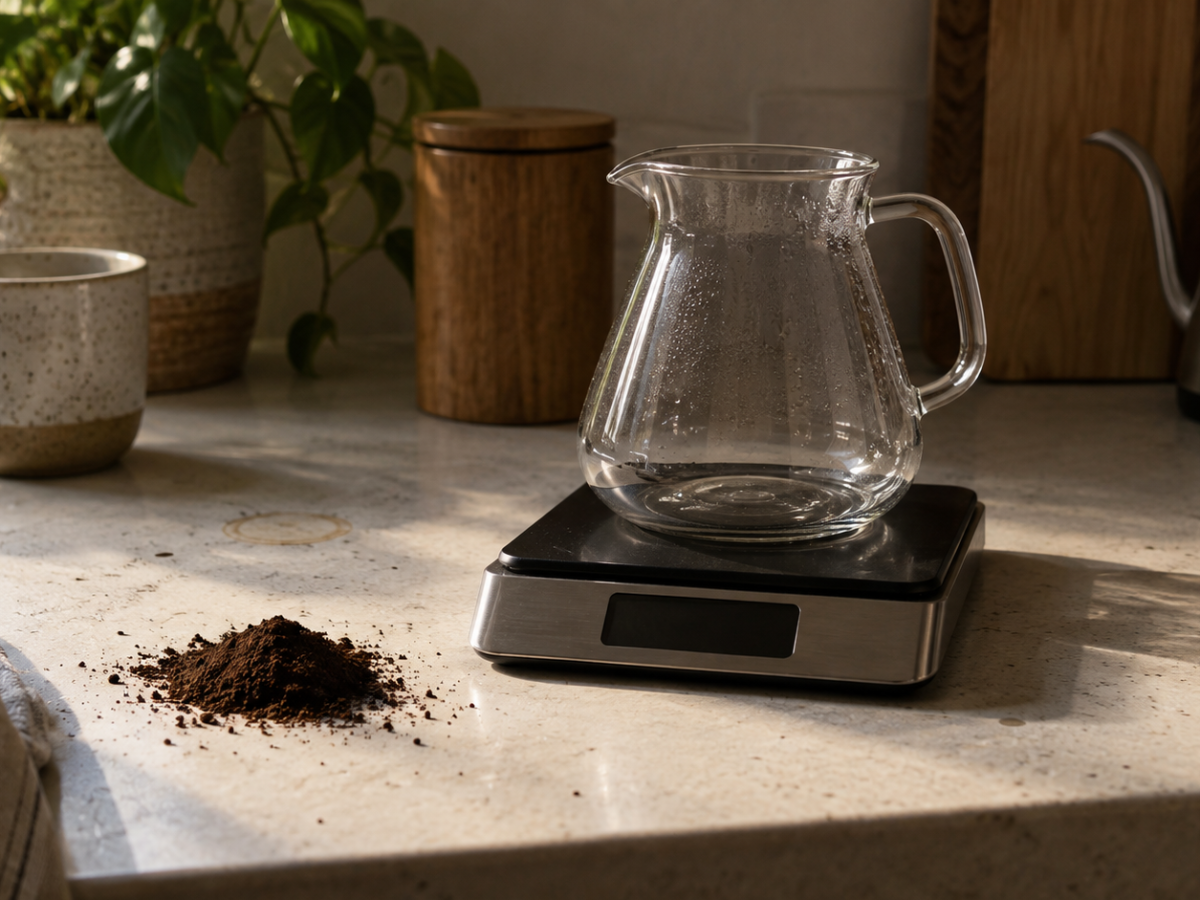
One feature is missing from that list and matters more than material: a built-in timer. Brewing is a rate, not just a weight, and a scale that shows grams and seconds on the same display is the difference between following a pour schedule and improvising one.
Three scales, in order of how much scale you need

Most capable
Fellow Tally Pro Coffee Scale
Why it fits
Resolution to 0.1 g with a timer and a brew-assist mode that tracks the pour as it happens, which is the feature set that turns a scale from a measuring device into a brewing instrument. Handles both espresso, where you weigh a 36 g yield off an 18 g dose, and pour-over, where you are hitting weight targets on a clock.
Limitations
By a distance the most expensive option here, and most of that cost is in features you only use if you are actively dialling in rather than repeating a recipe you already trust. It is a rechargeable device, so it is one more thing to keep charged.

The standard brew scale
Hario Drip Scale with Timer
Why it fits
Weight and elapsed time on one face, which is all a pour-over recipe actually requires. Hario's scale has been the default in this category long enough that most published brew recipes are written assuming exactly this readout, and its footprint fits a dripper and carafe without overhanging.
Limitations
Slower to settle than the Fellow, which is noticeable when you are pouring against a clock. Not sealed against splashes, and a pour-over station is a wet place. Its resolution is fine for filter but is at the edge of what espresso wants.

Cheapest that still reads 0.1 g
Greater Goods Digital Espresso Scale
Why it fits
0.1 g resolution with a 750 g capacity, which is the specification that matters in the accuracy line above, at a fraction of the price of the other two. Small enough to sit on a drip tray under a portafilter, which is where most espresso scales have to live.
Limitations
750 g is a low ceiling: a full 700 g pour-over plus the weight of the carafe will exceed it, so this is an espresso and small-batch scale rather than a general one. No brew-assist features, and the timer is basic.
Equipment List
Before you start brewing, make sure you have the following equipment:
- Coffee scale
- Coffee beans
- Grinder
- Brewing device (e.g., pour-over, French press, or drip coffee maker)
- Kettle
- Filter (if applicable)
Step-by-Step Brewing Guide
Follow these steps to brew the perfect cup of coffee using your new scale:
- Measure the coffee: Use your scale to measure the desired amount of coffee, typically 1:15 to 1:17 coffee-to-water ratio.
- Grind the beans: Grind the measured coffee beans to the optimal grind size for your brewing method.
- Heat the water: Heat water to the ideal temperature, between 195°F and 205°F.
- Brew the coffee: Place the ground coffee in your brewing device and slowly pour the heated water over it.
- Steep and serve: Allow the coffee to steep for the recommended time, then serve and enjoy.
Pro Tips for Coffee Enthusiasts
Take your coffee game to the next level with these expert tips:
- Use fresh, high-quality coffee beans for optimal flavor.
- Experiment with different roast levels and brewing methods to find your perfect cup.
- Invest in a good grinder to ensure consistent grind size and quality.
- Store your coffee beans in an airtight container to preserve freshness.
Frequently Asked Questions
Get answers to common questions about coffee scales and brewing:
- Q: What is the best type of coffee scale?
- A: The best type of coffee scale is one that is accurate, durable, and easy to use.
- Q: How often should I calibrate my coffee scale?
- A: Calibrate your scale every 1-3 months, or as recommended by the manufacturer.
- Q: Can I use a coffee scale for other purposes?
- A: Yes, coffee scales can be used for measuring other ingredients, such as tea, spices, or herbs.
Shop this guide