This post contains affiliate links. If you buy through them, brewing.com earns a commission at no cost to you. How we pick products
Beer · Guide
Conical Fermenter vs Bucket: Which is Better for Beer
| Pick | Best for | Price |
|---|---|---|
| Northern Brewer Reactor Conical Fermentor | Most accessible conical | $311.99 ↗ as of 24 Sep 2026, 4:45am GMT+0000 Details (paid link) |
| Conical Fermenter for Homebrew/Wine/Brewing, Pro Grade Stainless Steel - 13 Gallons | Stainless, large batch | $469.00 ↗ as of 24 Sep 2026, 4:45am GMT+0000 Details (paid link) |
| VEVOR Pressure Fermenter 15 PSI, 16 Gal/60L Stainless Steel Conical | If you want to ferment under pressure | $319.90 ↗ as of 24 Sep 2026, 4:45am GMT+0000 Details (paid link) |
| 7.9 Gallon Plastic Fermentor with Lid | The cheap option that works | $51.90 ↗ as of 24 Sep 2026, 4:45am GMT+0000 Details (paid link) |
| FerMonster 6 Gallon Carboy | Better plastic, see-through | $49.95 ↗ as of 24 Sep 2026, 4:45am GMT+0000 Details (paid link) |
| Fastrack Twin Bubble Airlock and Carboy Bung (2-Pack) | Fermentation lock | $6.29 ↗ as of 24 Sep 2026, 4:45am GMT+0000 Details (paid link) |
| Brewer's Elite Hydrometer & Plastic Test Jar | Take the readings | $21.99 ↗ as of 24 Sep 2026, 4:45am GMT+0000 Details (paid link) |
Prices come from Amazon and refresh nightly. A pick shows “Check price” when we do not have a current figure for it.
Introduction to Conical Fermenters and Buckets
For more beer tips, check out our beer brewing guides.When it comes to brewing beer, the equipment used can significantly impact the quality of the final product. Two popular options for fermentation vessels are conical fermenters and buckets. In this article, we will explore the differences between these two types of equipment and help you decide which one is better for your beer brewing needs.
Conical Fermenter
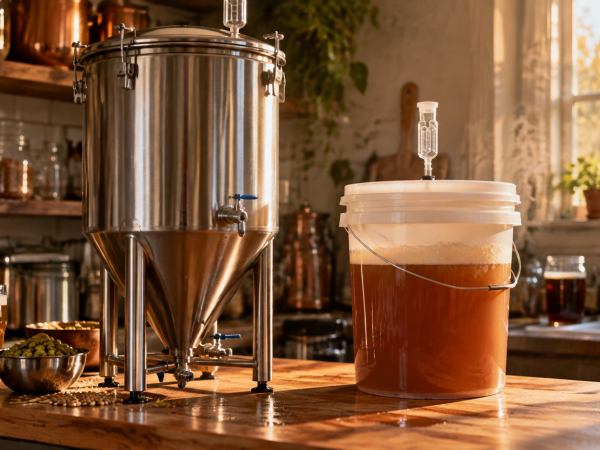
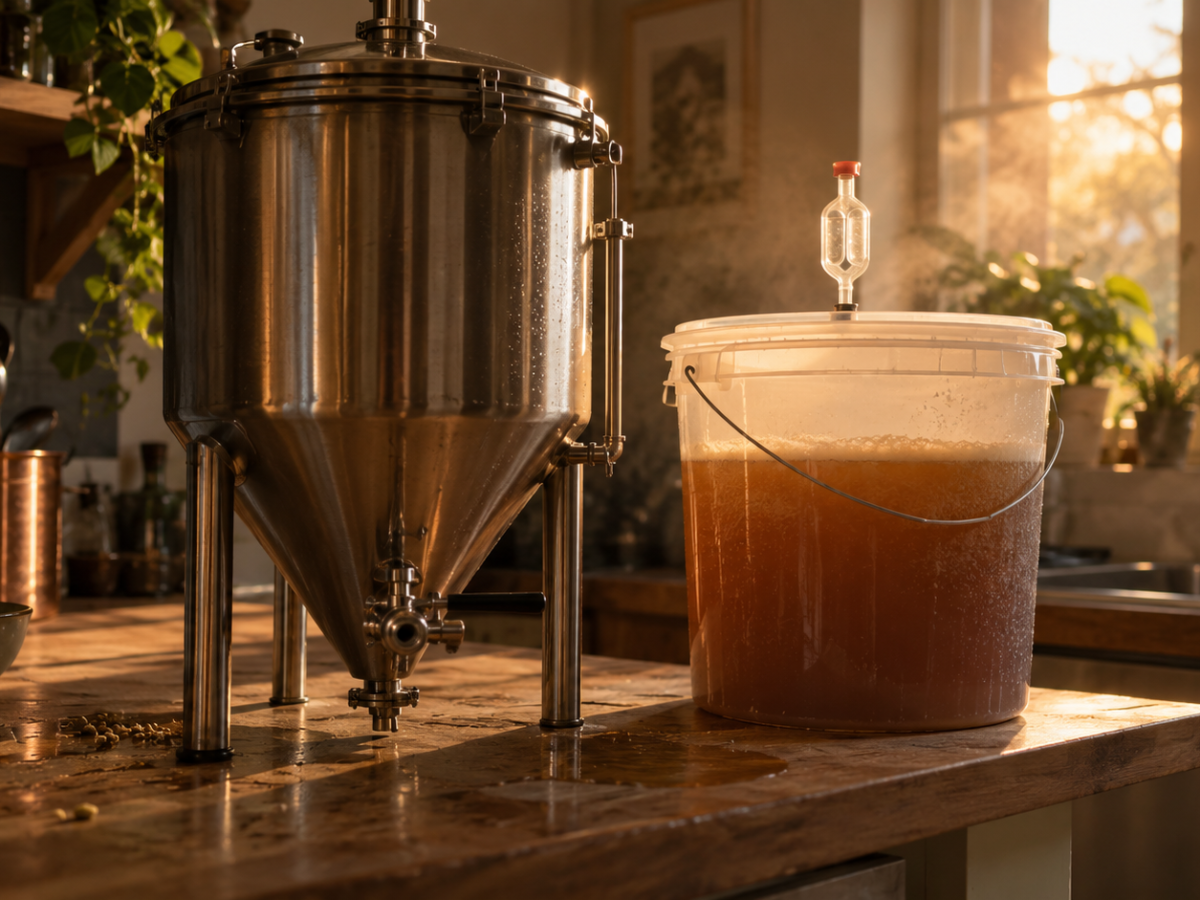
A conical fermenter is a type of fermentation vessel that is shaped like a cone. It has a wide top and a narrow bottom, which allows for easy transfer of beer and reduces the risk of contamination. Conical fermenters are typically made of stainless steel or plastic and come in a variety of sizes.

Most accessible conical
Northern Brewer Reactor Conical Fermentor
Why it fits
A conical at a price that is close to what a set of glass carboys plus a temperature controller costs, which is the honest comparison. The cone and dump valve let you drop trub and harvest yeast without racking the beer off it.
Limitations
Still several times the price of the bucket below, and a conical does nothing for beer quality that clean process and steady temperature do not already do.

Stainless, large batch
Conical Fermenter for Homebrew/Wine/Brewing, Pro Grade Stainless Steel – 13 Gallons
Why it fits
Thirteen gallons of stainless means two 5 gallon batches at once, or one batch with genuine headspace instead of a blow-off tube fight. Stainless is the surface that actually justifies the sanitation argument for conicals: no scratches to harbour anything, unlike plastic.
Limitations
Expensive, heavy, and it needs somewhere cold to live. A vessel this size will not fit in a standard kitchen refrigerator, so temperature control becomes its own project.
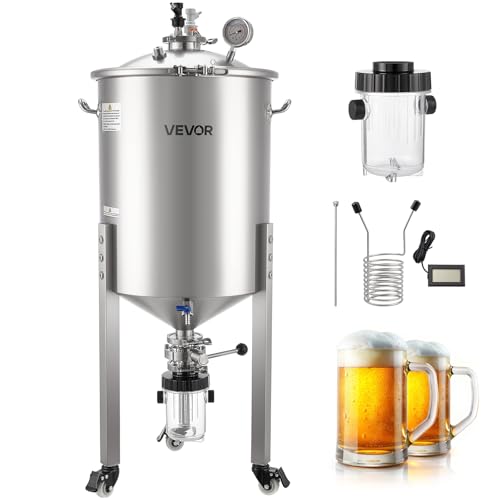
If you want to ferment under pressure
VEVOR Pressure Fermenter 15 PSI, 16 Gal/60L Stainless Steel Conical
Why it fits
Rated to 15 PSI, so you can ferment under pressure and transfer to a keg without ever exposing the beer to air. That closed transfer is the one thing a bucket genuinely cannot do.
Limitations
Pressure fermentation is a technique with its own learning curve and its own failure modes; a pressure-rated vessel used at atmospheric pressure is just an expensive conical.
Bucket
A bucket, also known as a food-grade plastic bucket, is a simple and affordable fermentation vessel. It is typically made of plastic and has a wide mouth and a straight side. Buckets are a popular choice for homebrewers due to their low cost and ease of use.

The cheap option that works
7.9 Gallon Plastic Fermentor with Lid
Nearly eight gallons of headspace for a 5 gallon batch, which is what stops a vigorous ale climbing out of the airlock. This is the vessel most homebrewers should start with and many never leave.

Better plastic, see-through
FerMonster 6 Gallon Carboy
A wide-mouth PET carboy you can get a hand and a brush into, unlike glass. You can watch the krausen fall, which is the one thing a bucket denies you.
Comparison of Conical Fermenter and Bucket
Both conical fermenters and buckets have their own advantages and disadvantages. Here are some key differences to consider:
- Cost: Buckets are generally less expensive than conical fermenters.
- Ease of use: Buckets are easy to use and require minimal setup, while conical fermenters require more equipment and setup.
- Sanitation: Conical fermenters are easier to sanitize than buckets due to their smooth surface and lack of corners.
- Temperature control: Conical fermenters often have built-in temperature control, while buckets require external temperature control devices.
Equipment List
Here is a list of equipment you will need to get started with brewing beer using a conical fermenter or bucket:
- Conical fermenter or bucket
- Fermentation lock
- Airlock
- Hydrometer
- Siphon and racking cane
- Bottling equipment

Fermentation lock
Fastrack Twin Bubble Airlock and Carboy Bung (2-Pack)
The twin-bubble style holds sanitiser without spitting it back into the beer when the temperature swings. Buy spares; they are the cheapest part of the setup and the easiest to lose.

Take the readings
Brewer's Elite Hydrometer & Plastic Test Jar
Fermentation is finished when gravity stops falling across two readings days apart, not when the airlock stops bubbling. A plastic jar survives being dropped on a wet floor; a glass one does not.
Step-by-Step Brewing Process
Here is a step-by-step guide to brewing beer using a conical fermenter or bucket:
- Mash and sparge your grains to create the wort.
- Boil the wort and add hops and other ingredients.
- Cool the wort and transfer it to the conical fermenter or bucket.
- Pitch the yeast and seal the fermenter.
- Monitor the fermentation process and take specific gravity readings.
- Condition and bottle the beer.
Pro Tips
Here are some pro tips to keep in mind when using a conical fermenter or bucket:
- Always sanitize your equipment before use.
- Use a hydrometer to monitor the specific gravity of your beer.
- Keep the fermentation area at a consistent temperature.
- Be patient and allow the beer to ferment and condition for the recommended amount of time.
Looking for more brewing resources? Browse our find local breweries or visit our brewing equipment for more tools and tips.
Frequently Asked Questions
Here are some frequently asked questions about conical fermenters and buckets:
- Q: Which is better, a conical fermenter or a bucket?
- A: Both have their own advantages and disadvantages, but conical fermenters are generally considered to be better due to their ease of use and sanitation.
- Q: How do I sanitize my conical fermenter or bucket?
- A: Use a no-rinse acid sanitiser such as Star San, after cleaning with a brewery detergent like PBW. Do not use bleach: residue becomes chlorophenols, which taste medicinal, and it permanently pits stainless steel.
- Q: How long does it take to brew beer using a conical fermenter or bucket?
- A: The brewing process can take anywhere from a few days to several weeks, depending on the type of beer being brewed.
Shop this guide