This post contains affiliate links. If you buy through them, brewing.com earns a commission at no cost to you. How we pick products
Coffee · Guide
Espresso for Beginners: Your Complete Guide to Home Espresso
| Pick | Best for | Price |
|---|---|---|
| Baratza Sette 270 | Grinder | $399.95 ↗ as of 24 Sep 2026, 4:45am GMT+0000 Details (paid link) |
| LuxHaus 58 mm Espresso Tamper | Tamper | $24.99 ↗ as of 24 Sep 2026, 4:45am GMT+0000 Details (paid link) |
| Greater Goods Digital Espresso Scale | Scale | $17.99 ↗ as of 24 Sep 2026, 4:45am GMT+0000 Details (paid link) |
| RSNMocha WDT Tool | WDT tool | $9.99 ↗ as of 24 Sep 2026, 4:45am GMT+0000 Details (paid link) |
| Breville Barista Express BES870XL | Best all-in-one start | $685.00 ↗ as of 24 Sep 2026, 4:45am GMT+0000 Details (paid link) |
| Gaggia Classic E24 (RI9380/46) | Best platform to keep | $452.96 ↗ as of 24 Sep 2026, 4:45am GMT+0000 Details (paid link) |
Prices come from Amazon and refresh nightly. A pick shows “Check price” when we do not have a current figure for it.
What Makes Espresso Different?
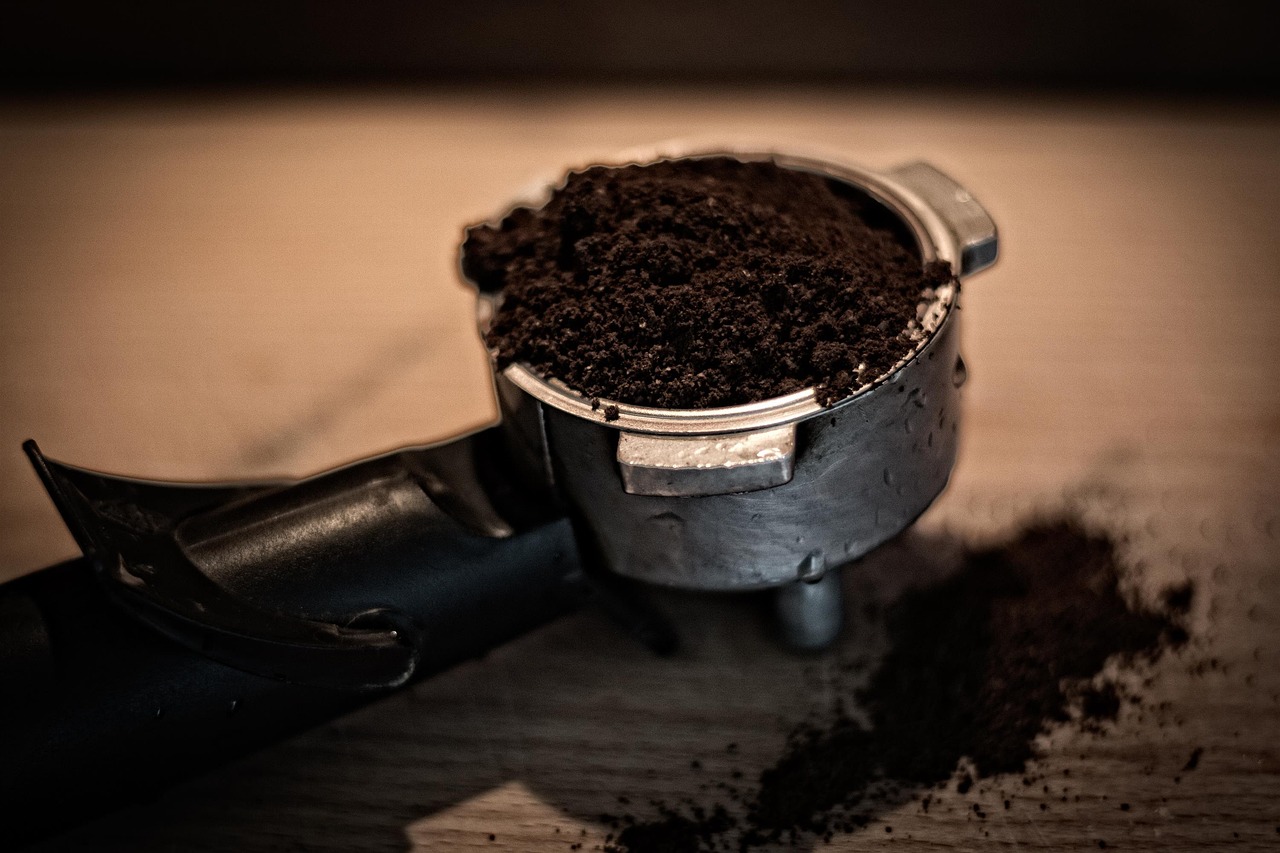
Espresso isn’t just strong coffee – it’s a unique brewing method that forces nearly boiling water through finely ground coffee at high pressure (9 bars). This creates a concentrated 1-2 ounce shot with rich crema, intense flavor, and a syrupy body that’s the foundation for lattes, cappuccinos, and Americanos.
Equipment You’ll Need
- Espresso Machine – Entry-level: Gaggia Classic Pro, Mid-range: Breville Barista Express, Premium: Rocket Appartamento
- Espresso Grinder – More important than the machine! Budget: Baratza Sette 270, Premium: Eureka Mignon
- Tamper – 51mm or 58mm to match your portafilter
- Scale – Accurate to 0.1g
- Distribution Tool – WDT (Weiss Distribution Technique) tool helps break clumps
- Fresh Coffee Beans – Espresso roast, used within 2-4 weeks of roasting
Grinder
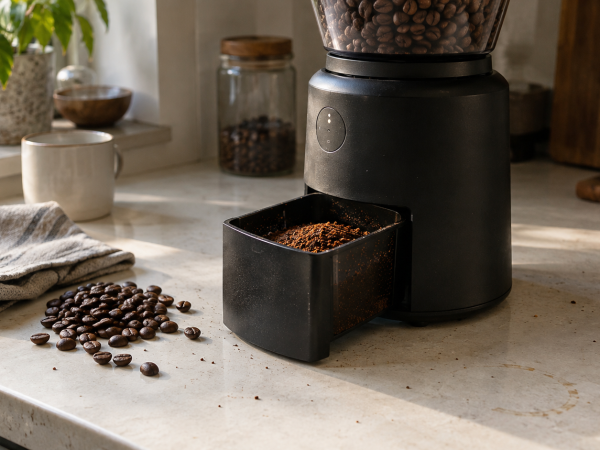
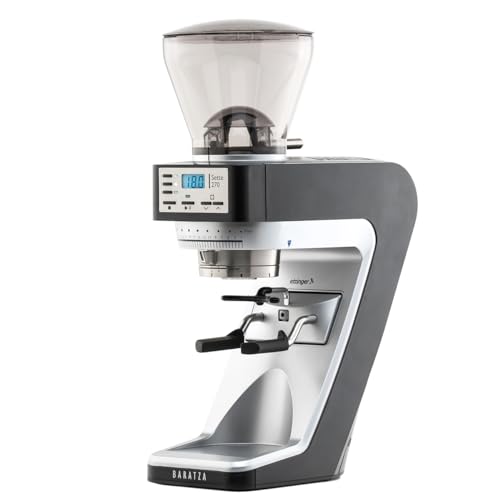
Baratza Sette 270
Macro settings plus micro-steps between them, and it grinds straight down into the portafilter with very little left behind in the chute. Loud, but fast and repairable.

Tamper
LuxHaus 58 mm Espresso Tamper
Flat stainless base in the 58 mm size, which matches the Gaggia above. Measure your basket first: the Breville takes 54 mm.

Scale
Greater Goods Digital Espresso Scale
0.1 g resolution and small enough to sit on the drip tray under the cup, which is what the 18 g in, 36 g out recipe below requires.
WDT tool
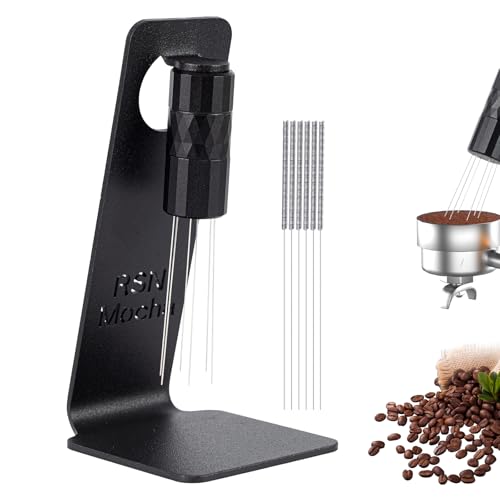
RSNMocha WDT Tool
Fine needles on a magnetic stand. Stirring the dose before tamping breaks the clumps that cause channelling, which is the uneven-distribution mistake listed further down.
The two machines that list is describing

Best all-in-one start
Breville Barista Express BES870XL
Why it fits
It is the only machine at this level that includes the grinder, and for a first setup that is decisive, because an espresso-capable grinder normally costs as much again. Thermocoil heating with PID temperature control, a 15-bar pump extracting at 9 bar, low-pressure pre-infusion, an 18 g target dose, and a 16-setting conical burr grinder that doses straight into the portafilter. The pressure gauge on the front gives a beginner immediate feedback on whether the grind is right, which is the hardest thing to learn without it.
Limitations
A 54 mm portafilter rather than the 58 mm commercial standard, so accessories are fewer and pricier. Thermocoil means you cannot brew and steam simultaneously, and the steam power is modest against a real boiler. The 16 grind settings are stepped and feel coarse between clicks once you start chasing lighter roasts. Servicing goes through Breville.
Best platform to keep
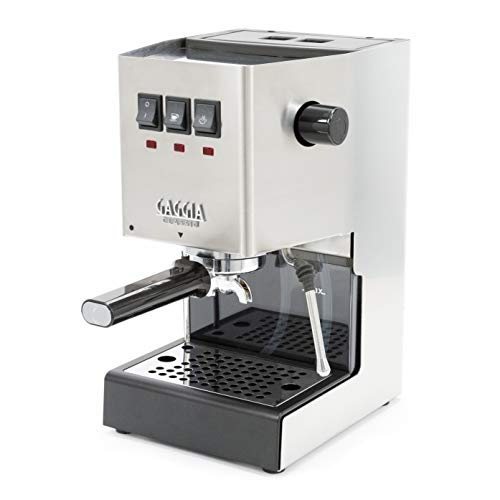
Gaggia Classic E24 (RI9380/46)
Why it fits
A 58 mm commercial portafilter and grouphead, which means the whole aftermarket fits it for as long as you own it. The E24 revision uses a lead-free brass boiler with more mass than the aluminium it replaced, and mass is what buys temperature stability and steam power. Single 1425 W boiler, chrome-plated brass grouphead, commercial-style steam wand, 9-bar extraction, three baskets. The Classic family is the most documented and most repairable machine in home espresso.
Limitations
No grinder, and no PID from the factory, so shot-to-shot temperature is a band rather than a number. Single boiler dual use, so brewing then steaming means waiting on the climb. It offers no guidance: there is no gauge or guided workflow telling you what went wrong.
The Espresso Recipe
Dose: 18g coffee in
Yield: 36g espresso out
Time: 25-30 seconds
Ratio: 1:2 (adjustable to taste)
Pulling Your First Shot
Step 1: Preheat Everything
Turn on machine 15-20 minutes before brewing. Run a blank shot through the portafilter to warm it up.
Step 2: Grind and Dose
Grind 18g of coffee directly into portafilter. Start with a fine grind (like table salt). Distribute grounds evenly.
Step 3: Tamp
Apply firm, even pressure (30 lbs) straight down. The puck should be level and compact.
Step 4: Pull the Shot
Lock portafilter, place cup on scale, start timer and extraction simultaneously. Watch for honey-like flow. Stop at 36g output (25-30 seconds).
Step 5: Taste and Adjust
Too sour = grind finer or increase time
Too bitter = grind coarser or decrease time
Weak/watery = use more coffee or finer grind
Too strong = use less coffee or coarser grind
Dialing In Your Espresso
Dialing in means adjusting variables until you achieve the perfect shot. Change ONE variable at a time:
- Grind size – Most impactful variable
- Dose – Amount of coffee (16-20g typical)
- Yield – Amount of espresso out (1:2 to 1:3 ratio)
- Time – 25-30 seconds is the target
- Temperature – 200-205°F (most machines preset)
Common Beginner Mistakes
- Using stale beans (older than 4 weeks)
- Wrong grind size (most common issue)
- Uneven distribution (causes channeling)
- Inconsistent tamping pressure
- Not preheating equipment
- Giving up too soon (takes practice!)
Shop this guide
RSNMocha WDT Tool Espresso Distribution Tool, Coffee Distribution Tool with Magnetic Stand,…