This post contains affiliate links. If you buy through them, brewing.com earns a commission at no cost to you. How we pick products
Coffee · Guide
Latte Art Tutorial: Pour Hearts and Rosettas
| Pick | Best for | Price |
|---|---|---|
| Breville Barista Express BES870XL | Machine with steam wand | $685.00 ↗ as of 24 Sep 2026, 4:45am GMT+0000 Details (paid link) |
| De'Longhi Milk Frothing Jug, 12 oz | The pitcher | $19.95 ↗ as of 24 Sep 2026, 4:45am GMT+0000 Details (paid link) |
| CASABREWS Milk Frothing Pitcher, 350 ml | Smaller pitcher | $11.99 ↗ as of 24 Sep 2026, 4:45am GMT+0000 Details (paid link) |
Prices come from Amazon and refresh nightly. A pick shows “Check price” when we do not have a current figure for it.
Introduction to Latte Art
For more coffee tips, check out our coffee guides.Latte art is a creative and delicate process that requires skill, patience, and practice. In this tutorial, we will guide you through the steps to pour hearts and rosettas, two of the most popular latte art designs.
Equipment List
- Espresso machine
- Milk frothing pitcher
- Steam wand
- Coffee cups
- Thermometer
- Latte art tool (optional)

Machine with steam wand
Breville Barista Express BES870XL
Includes the steam wand the tutorial assumes. Thermocoil heating means it cannot brew and steam at the same time, so you pull the shot first, then steam.
The pitcher
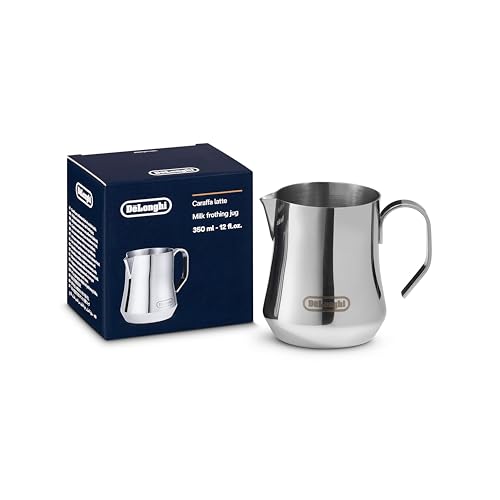
De'Longhi Milk Frothing Jug, 12 oz
Why it fits
Twelve ounces is the size that matters for the pours described below: the jug should be roughly twice the volume of milk you are steaming, so a 12 oz jug suits the 5-6 oz that fills a single cappuccino cup. A jug much larger than the milk in it will not develop the tight whirlpool that keeps the microfoam folded in. Stainless, with a spout shaped for a controlled stream.
Limitations
Stainless conducts heat straight to your hand, which is how you judge the 140-160 degree window without a thermometer, but it means a hot jug is genuinely hot. One fixed size, so if you routinely pour two drinks at once you will want a second, larger jug.

Smaller pitcher
CASABREWS Milk Frothing Pitcher, 350 ml
A 12 oz jug with a sharper spout, which gives a narrower stream at the end of the pour. The fine tip is what draws the line through a rosetta.
Step-by-Step Guide to Pouring Hearts
To pour a heart, you will need to hold the pitcher at an angle and pour the steamed milk into the cup in a smooth, flowing motion. Start by pouring a small amount of milk into the cup, then move the pitcher in a circular motion to create the heart shape.
Step 1: Prepare the Milk
Pour milk into the frothing pitcher and heat it to the desired temperature using the steam wand. The ideal temperature for latte art is between 140°F and 160°F.
Step 2: Create the Heart Shape
Hold the pitcher at an angle and pour the steamed milk into the cup in a smooth, flowing motion. Start by pouring a small amount of milk into the cup, then move the pitcher in a circular motion to create the heart shape.
Step-by-Step Guide to Pouring Rosettas
To pour a rosetta, you will need to hold the pitcher at an angle and pour the steamed milk into the cup in a smooth, flowing motion. Start by pouring a small amount of milk into the cup, then move the pitcher in a zig-zag motion to create the rosetta shape.
Step 1: Prepare the Milk
Pour milk into the frothing pitcher and heat it to the desired temperature using the steam wand. The ideal temperature for latte art is between 140°F and 160°F.
Step 2: Create the Rosetta Shape
Hold the pitcher at an angle and pour the steamed milk into the cup in a smooth, flowing motion. Start by pouring a small amount of milk into the cup, then move the pitcher in a zig-zag motion to create the rosetta shape.
Pro Tips for Latte Art
- Use fresh and high-quality milk for the best results.
- Experiment with different temperatures and pouring techniques to achieve the desired design.
- Practice regularly to develop your skills and muscle memory.
Looking for more brewing resources? Browse our coffee equipment reviews or visit our find coffee roasters for more tools and tips.
Frequently Asked Questions
Q: What is the ideal temperature for latte art?
A: The ideal temperature for latte art is between 140°F and 160°F.
Q: How do I achieve a smooth and consistent pour?
A: To achieve a smooth and consistent pour, make sure to hold the pitcher at an angle and pour the steamed milk into the cup in a smooth, flowing motion.
Shop this guide