This post contains affiliate links. If you buy through them, brewing.com earns a commission at no cost to you. How we pick products
Wine · Recipe
Fruit Wine Recipes: Beyond Grapes
| Pick | Best for | Price |
|---|---|---|
| 7.9 Gallon Plastic Fermentor with Lid | Primary vessel | $51.90 ↗ as of 24 Sep 2026, 4:45am GMT+0000 Details (paid link) |
| FerMonster 6 Gallon Carboy | Secondary vessel | $49.95 ↗ as of 24 Sep 2026, 4:45am GMT+0000 Details (paid link) |
| Brewer's Elite Hydrometer & Plastic Test Jar | Hydrometer | $21.99 ↗ as of 24 Sep 2026, 4:45am GMT+0000 Details (paid link) |
| Fermtech Mini Auto-Siphon | Siphon and racking cane | $8.99 ↗ as of 24 Sep 2026, 4:45am GMT+0000 Details (paid link) |
| Fastrack Twin Bubble Airlock and Carboy Bung (2-Pack) | Airlock and bung | $6.29 ↗ as of 24 Sep 2026, 4:45am GMT+0000 Details (paid link) |
| FastRack Green Wine Bottles 750ml, 12-Pack W5 Bordeaux | Bottles | $30.62 ↗ as of 24 Sep 2026, 4:45am GMT+0000 Details (paid link) |
| FastRack Bag of 100, #9 Straight Wine Corks | Corks | $18.89 ↗ as of 24 Sep 2026, 4:45am GMT+0000 Details (paid link) |
| Red Star Premier Cuvée Wine Yeast, 10 Pack | The yeast this recipe names | $8.99 ↗ as of 24 Sep 2026, 4:45am GMT+0000 Details (paid link) |
| Pectic Enzyme Powder, 1 oz | Pectic enzyme | $6.30 ↗ as of 24 Sep 2026, 4:45am GMT+0000 Details (paid link) |
| Acid Blend, 1 lb | Acid blend | $13.00 ↗ as of 24 Sep 2026, 4:45am GMT+0000 Details (paid link) |
| Five Star Star San, 32 Ounce | Use this rather than bleach | $28.98 ↗ as of 24 Sep 2026, 4:45am GMT+0000 Details (paid link) |
Prices come from Amazon and refresh nightly. A pick shows “Check price” when we do not have a current figure for it.
Introduction to Fruit Wine
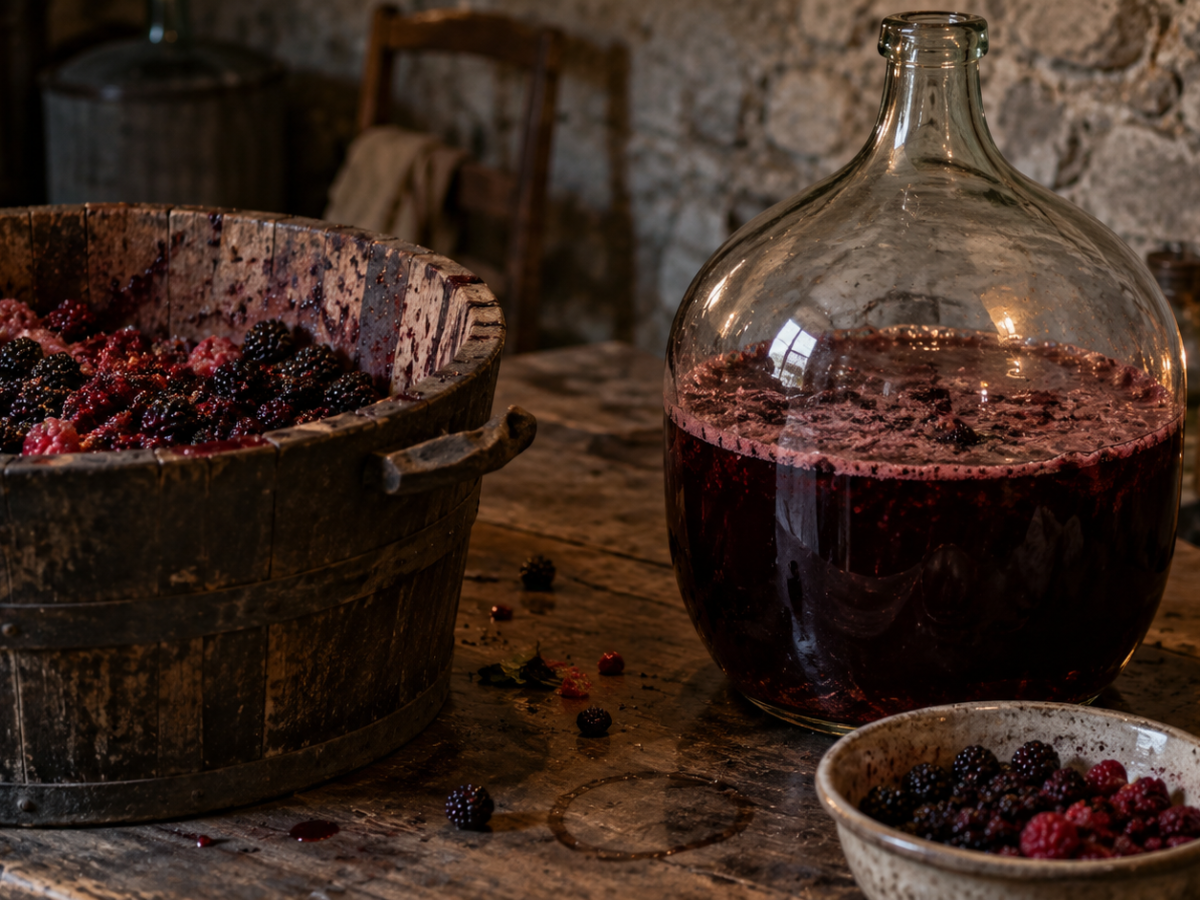
Fruit wine, also known as country wine, is a type of wine that is made from fruits other than grapes. While grape wine is the most popular type of wine, fruit wine offers a wide range of flavors and possibilities for wine enthusiasts. In this article, we will explore the world of fruit wine and provide you with some delicious recipes to try at home.
Equipment List
To get started with making fruit wine, you will need the following equipment:
- Pot of at least 6 quarts (1.5 gallons) — a 1-gallon batch fills 4 quarts on its own, so a 4-quart pot leaves no room to stir hot syrup without slopping it
- Fermentation vessel (food-grade plastic or glass)
- Hydrometer (for measuring specific gravity)
- Siphon and racking cane
- Airlock and bung
- Bottles and corks (for secondary fermentation and storage)

Primary vessel
7.9 Gallon Plastic Fermentor with Lid
Fruit wine ferments on the pulp for the first week, so the primary has to be wide enough to get mashed fruit in and a spoon out. Headspace matters more here than with juice alone because fruit pulp foams.

Secondary vessel
FerMonster 6 Gallon Carboy
The two to three months of secondary the recipes below call for wants minimal headspace and no light. Clear plastic lets you see the sediment line so you know when racking is worth doing.

Hydrometer
Brewer's Elite Hydrometer & Plastic Test Jar
Fruit wine sugar content varies enormously with the fruit and the season, so the starting gravity is something you measure rather than assume from a recipe.

Siphon and racking cane
Fermtech Mini Auto-Siphon
Fruit leaves a deep, loose bed of pulp sediment that stirs up easily. The rigid cane and standoff tip are what keep it in the old vessel.

Airlock and bung
Fastrack Twin Bubble Airlock and Carboy Bung (2-Pack)
One for the primary and one for the secondary, which you will have running at the same time during the transfer.

Bottles
FastRack Green Wine Bottles 750ml, 12-Pack W5 Bordeaux
Green glass, because the recipes below ask for at least six months of storage and light is what undoes fruit aromatics fastest.

Corks
FastRack Bag of 100, #9 Straight Wine Corks
Standard #9 for a 750 ml neck. You will need a corker to seat them.
Fruit Wine Recipes
Here are a few fruit wine recipes to try at home:
Strawberry Wine Recipe
This recipe makes approximately 1 gallon of wine. Three pounds of fruit to the gallon is the usual ratio; scale everything up together for a larger batch.
- 3 lbs of fresh strawberries
- 1 lb of granulated sugar
- 1 packet of wine yeast (Red Star Premier Cuvee or similar)
- 1 tsp of acid blend
- 1 tsp of pectic enzyme
Instructions:
- Mash the strawberries in a large pot to release their juice.
- Combine the strawberry juice, sugar, yeast, acid blend, and pectic enzyme in the fermentation vessel.
- Cover the vessel and let it sit in a cool, dark place for 7-10 days (primary fermentation).
- Rack the wine into a secondary fermentation vessel and fit it with an airlock.
- Allow the wine to ferment for an additional 2-3 months (secondary fermentation).
- Bottle the wine and store it in a cool, dark place for at least 6 months before serving.

The yeast this recipe names
Red Star Premier Cuvée Wine Yeast, 10 Pack
The recipe calls for it by name. High alcohol tolerance and a wide temperature range, which suits a sugar-adjusted fruit must that can run warmer than you intended.

Pectic enzyme
Pectic Enzyme Powder, 1 oz
Strawberries are high in pectin, and pectin haze is permanent once the wine is made. This is the one additive in the list you genuinely cannot skip with soft fruit.

Acid blend
Acid Blend, 1 lb
Tartaric, malic and citric. Fruit other than grapes is usually out of balance for winemaking in one direction or the other, and this is what corrects it.
Raspberry Wine Recipe
This recipe makes approximately 1 gallon of wine. Three pounds of fruit to the gallon is the usual ratio; scale everything up together for a larger batch.
- 3 lbs of fresh raspberries
- 1 lb of granulated sugar
- 1 packet of wine yeast (Red Star Premier Cuvee or similar)
- 1 tsp of acid blend
- 1 tsp of pectic enzyme
Instructions:
- Mash the raspberries in a large pot to release their juice.
- Combine the raspberry juice, sugar, yeast, acid blend, and pectic enzyme in the fermentation vessel.
- Cover the vessel and let it sit in a cool, dark place for 7-10 days (primary fermentation).
- Rack the wine into a secondary fermentation vessel and fit it with an airlock.
- Allow the wine to ferment for an additional 2-3 months (secondary fermentation).
- Bottle the wine and store it in a cool, dark place for at least 6 months before serving.
Step-by-Step Process
The following is a general step-by-step process for making fruit wine:
- Sanitise every surface the must will touch with a no-rinse sanitiser such as Star San. Bleach is not suitable here: residue carries into the wine and it damages stainless.
- Mash the fruit in a large pot to release its juice.
- Combine the fruit juice, sugar, yeast, acid blend, and pectic enzyme in the fermentation vessel.
- Cover the vessel and let it sit in a cool, dark place for 7-10 days (primary fermentation).
- Rack the wine into a secondary fermentation vessel and fit it with an airlock.
- Allow the wine to ferment for an additional 2-3 months (secondary fermentation).
- Bottle the wine and store it in a cool, dark place for at least 6 months before serving.
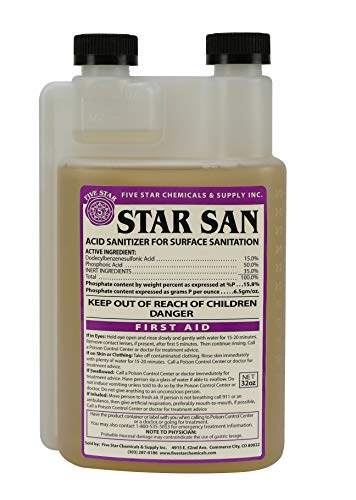
Use this rather than bleach
Five Star Star San, 32 Ounce
Bleach residue reacts with wine and fruit phenols to give medicinal, plastic-tasting off-flavours, and it needs a rinse that recontaminates whatever you just cleaned. Star San is acid-based and no-rinse at working strength.
Pro Tips
Here are a few pro tips to keep in mind when making fruit wine:
- Use fresh, high-quality fruit for the best flavor.
- Sanitize all equipment to prevent contamination.
- Monitor the specific gravity of the wine to ensure proper fermentation.
- Be patient and allow the wine to ferment for the full recommended time.
FAQ
Here are a few frequently asked questions about making fruit wine:
- Q: Can I use frozen fruit to make wine?
- A: Yes, frozen fruit can be used to make wine, but it may affect the flavor and quality of the final product.
- Q: How long does it take to make fruit wine?
- A: The fermentation process typically takes 2-3 months, but the total time from start to finish can be 6-12 months or more.
- Q: Can I add flavorings or spices to my fruit wine?
- A: Yes, flavorings and spices can be added to fruit wine, but use them sparingly to avoid overpowering the natural flavor of the fruit.
Shop this recipe