This post contains affiliate links. If you buy through them, brewing.com earns a commission at no cost to you. How we pick products
Equipment
Wine gear
21 pieces of equipment we have written about and would buy. Every one is explained in a guide on this site, so you can read the reasoning before you spend anything.
-

If you want the real thing
5 Gallon Oak Barrel, 20 Litre
A barrel is not just an oak delivery system. Staves breathe, so the wine takes in a small, continuous amount of oxygen over months, and that slow oxidation is the part chips and spirals cannot reproduce at any dose.
Worth knowing: At 5 gallons the wood-to-wine ratio is several times what a commercial 225 litre barrique gives you, so oak character arrives far faster than the traditional timelines suggest. It also has to stay full or stay maintained; an empty small barrel spoils.
-

The corker to buy if you bottle regularly
Italian Floor Wine Corker for Bottling, Adjustable Plunger and Grip
A floor corker compresses the cork in iris jaws and drives it with your body weight through a lever, so the cork goes in straight and fully seated every time. Adjustable plunger depth is what lets you set the cork flush rather than proud or sunk.
Worth knowing: It is large, it has to be bolted or braced to be used properly, and it is hard to justify for one batch a year. This is the tool for someone bottling thirty bottles at a time, repeatedly.
-

Primary vessel
7.9 Gallon Plastic Fermentor with Lid
Fruit wine ferments on the pulp for the first week, so the primary has to be wide enough to get mashed fruit in and a spoon out. Headspace matters more here than with juice alone because fruit pulp foams.
-

Or the simple vessel
FerMonster 6 Gallon Carboy
A carboy in a tub of water with a frozen bottle in it is a genuinely effective swamp cooler, and thermal mass does most of the work a control unit would otherwise do.
-

The temperature control unit this list means
Inkbird Dual Stage Temperature Controller with Probe
Two switched outlets, one for cooling and one for heating, driven from one probe and one setpoint. This is what turns any spare refrigerator plus any heat source into a fermentation chamber that holds the 15-20°C band this article specifies, rather than you checking a thermometer twice a day.
Worth knowing: It controls the air around the fermenter, not the liquid inside it. Fermentation is exothermic, so the must runs warmer than the chamber; taping the probe to the vessel under insulation is closer to the truth than leaving it hanging in the air.
-

Bottles
FastRack Green Wine Bottles 750ml, 12-Pack W5 Bordeaux
Green glass filters the light that degrades wine in storage, and the Bordeaux shape stacks and cellars properly. Sold without corks, which is the right way round.
-

Cheap enough to start with
Portuguese Double Lever Corker
A double-lever hand corker costs a fraction of a floor unit and will cork a batch of wine. For a first vintage or an occasional batch, spending the difference on better corks is the better trade.
Worth knowing: Hand correcting is genuinely tiring across thirty bottles, and a lever corker compresses less evenly than an iris, which makes a partially-seated or mushroomed cork much more likely.
-

Spirals last longer than chips
French Oak Infusion Spirals - Medium Toast
A spiral has far less surface area than loose chips for its mass, so it extracts more slowly and more evenly, which is closer to what a barrel actually does. French oak at medium toast is the classic spice-and-vanilla direction rather than the coconut of American oak.
-

Only the mead needs this
Fermax Yeast Nutrient, 1 lb
The real practical difference between the two processes. Grape must feeds the yeast; honey must does not, and skipping nutrient is why first meads stall and smell of sulfur.
-

The corks themselves
FastRack #9 Straight Wine Corks, 100 count
#9 is the standard diameter for a 750 ml wine bottle neck. Buy them in a hundred so you are not rationing corks mid-session, and do not reuse old ones.
-

Honey, for the mead side
Brewer's Best Wildflower Honey, 2 lb Jar
The fermentable that defines the difference this article is about. A 5 gallon traditional mead needs roughly 15 lb, so scale the order accordingly.
-
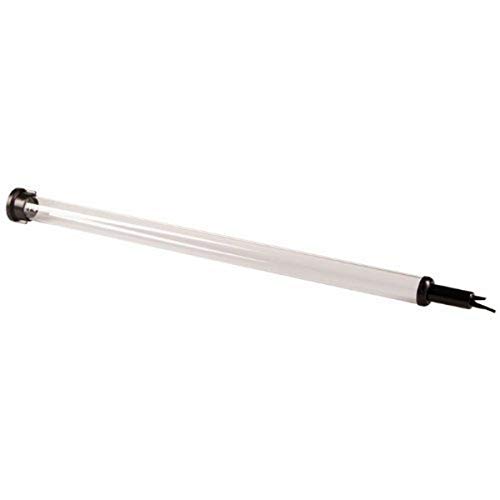
Taste without contaminating
Fermtech Wine Thief 18", Clear
Oaking is judged by tasting, weekly, and a thief lets you pull a sample without opening the vessel to a ladle. The 18 inch length reaches the bottom of a standard carboy.
-

Campden tablets
Campden Tablets (sodium metabisulfite), 1 Pound
One tablet per gallon is the conventional dose and the reason tablets exist: they make a fiddly sulfite measurement into a countable one.
-

Acid blend
Acid Blend, 1 lb
Tartaric, malic and citric. Fruit other than grapes is usually out of balance for winemaking in one direction or the other, and this is what corrects it.
-

A red-wine Saccharomyces cerevisiae
Lalvin RC-212 Wine Yeast, 10 Pack
RC-212 is a Saccharomyces cerevisiae strain isolated in Burgundy and sold specifically for red varieties, selected for colour and phenolic retention. If you want a concrete example of the strain-matters argument this article makes, comparing RC-212 against a neutral strain on the same must is it.
Worth knowing: It is documented as having relatively high nutrient demand, so it is more prone to a sluggish or stuck fermentation in a thin must than a robust all-purpose strain. Plan on a nutrient addition.
-

Yeast that covers both
Red Star Premier Cuvée Wine Yeast, 10 Pack
High alcohol tolerance and wide temperature range make it a reasonable single strain for a first mead and a first wine, which is exactly the comparison this article invites.
-
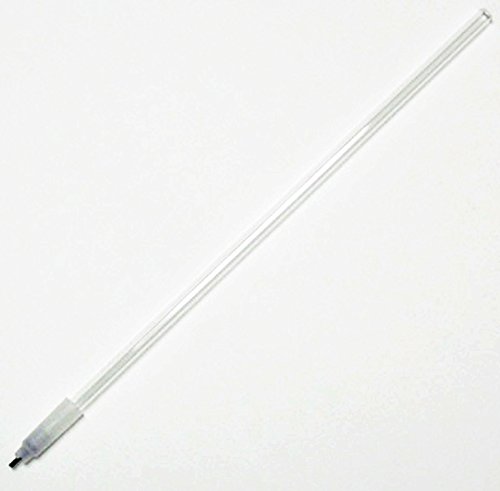
Fill without oxidising
3/8" Bottle Filler with Spring
A spring-tip filler starts and stops the flow at the bottom of the bottle, so wine fills from underneath instead of splashing through air. It also leaves the right headspace automatically when you withdraw it.
-

Airlock and bung
Fastrack Twin Bubble Airlock and Carboy Bung (2-Pack)
Both step lists tell you to monitor the airlock. Twin bubble holds its water through a months-long ferment.
-
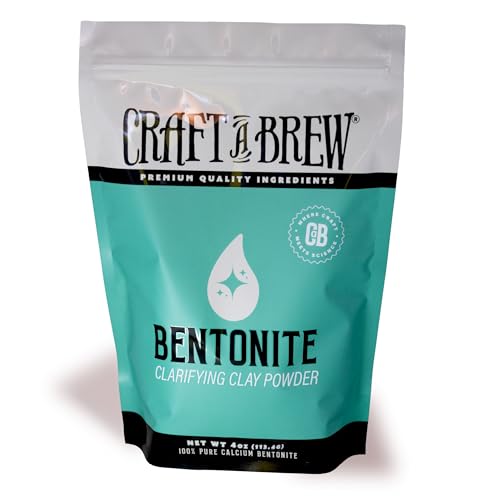
The fining agent the guide names
Craft A Brew Bentonite Fining Agent & Clarifier
Bentonite is a clay that carries a negative charge; it binds the positively charged proteins that make young wine hazy and drags them to the bottom. It is the first fining most winemakers should reach for because it does not strip colour the way gelatin can.
-

Pectic enzyme
Pectic Enzyme Powder, 1 oz
Strawberries are high in pectin, and pectin haze is permanent once the wine is made. This is the one additive in the list you genuinely cannot skip with soft fruit.
-

Or the powder
Potassium Metabisulphite, 2 oz
The same protection without the sodium, measured by weight rather than by tablet. Two ounces will last a home winemaker a very long time.